
07 April 2016
Canning and Pickling Salt for Foodservice
Restaurants and foodservice operators continue to look for opportunities to fulfill consumer demands. One of those interests includes canned and pickled food. Foodservice is generally regarded as fast-paced, offering incredibly fresh offerings. The process of canning and pickling food, on the other hand, requires patience and time, and really goes one step beyond cooking.
Canning is a method that applies heat to food in a closed glass jar to stop the natural spoilage that would otherwise take place, and removes air from the jar to create a seal. The flavors and textures that come from canning and pickling are truly unique. Salt is among the most important ingredients in canning and pickling, second only to the quality of the fruits and vegetables themselves.
To start, select fresh, firm fruits or vegetables that are free of spoilage. Measure or weigh amounts carefully, because the proportion of fresh food to other ingredients will affect flavor and, in many instances, food safety. Use salt that is fairly uniform in size and density, and that is also free of additives. Flow or anti-caking agents added to salts may make the brine cloudy.
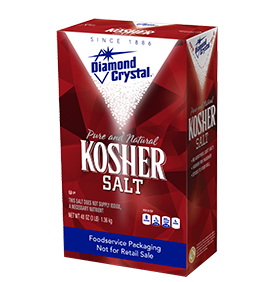
In the foodservice setting and for consumers, several salts can be used like Diamond Crystal® Kosher Salt, Diamond Crystal® Fine Sea Salt and Diamond Crystal® Purified Sea Salt. These salts are high in purity and are additive-free, making them perfect for your canning and pickling needs.
Tagged with:HERE TO HELP
Customer Support:
800-428-4244

